Saturday, August 1, 2020

Final Reflection

Final Reflection

1) I have had to do a lot for this class: interview people, come up with ideas, etc. Many of the things that I did were fun. For instance, I really enjoyed doing the "Bug List", the "Creating a Custom Avatar" and the "Idea Napkin". I liked doing these because they gave me the opportunity to express myself and be imaginative. Take the "Creating a Custom Avatar" assignment for instance. When I did this, I was able to get to know who my customer was and who I should be targeting. By getting to know my customer, I would be able to tailor my product to them. There were also some things that I didn't like doing in this class. One such assignment was the "Elevator Pitches". I hated doing the "Elevator Pitches". I hated doing these assignments because I hate speaking in front of the camera. I don't know why I hate speaking in front of the camera but it definitely made this assignment unbearable to do. Even though I hated this one assignment, I think that the majority of assignments were fun and enjoyable.

2) The idea I had of entrepreneurship was pretty simple. I thought it was all about opening a store and hoping people walk in, but it turns out it is much more than that. This class taught me that entrepreneurs do things like talk to customers, VC's, etc. The one formative experience I had was talking to people about my idea. This gave me insight into what entrepreneurs do in order to create the best idea they can. Also, these assignments really showed me how hard it is to be an entrepreneur. Like I said earlier, I thought entrepreneurship was all about opening a store but there is a lot more that goes into it. The memory that'll stick with me is definitely when I had to create an idea. My idea was all about creating online presences for small businesses. I definitely want to keep this idea in the back of my mind so I can see if it will still create value for people in the future. The most joyous experience I had was when I got to create my idea. I think my idea could help a lot of people. If I can ever create a business centered around this idea, I think that I could help a lot of people and be happy while doing it. The experience I am most proud of is completing the whole class. This class took us through the process of the average entrepreneur. We had to interview customers, develop our ideas, etc. After completing the class, I now have even more respect for those who want to help make the world a better place.

3) I don't consider myself to be an entrepreneur yet. In order to be an entrepreneur, you have to have an entrepreneurial mindset and you have to be actively trying to create value for people. So far, I have come up with an idea and talked to people about the idea, but not much other than that. I do however, think that I have developed an entrepreneurial mindset. This class has given me the knowledge to identify opportunities, told me the steps to take to develop my idea and how to turn my idea into a business. Even though I am not an entrepreneur yet, I can see myself becoming one in the future, thanks to this class.

4) If I were to recommend one thing for a future entrepreneur, I would recommend that they be as outgoing as possible. The majority of the tasks that entrepreneurs do has to do with being social: interviews, meeting with VC's, etc. You can have a great idea, but if you are not outgoing, it'll be hard to tell people about it. One thing I would tell someone who is taking this class is to stay on top of your work. There are about three assignments per week, which doesn't seem like a lot, but they can take up a good bit of your time. It is important to start them early so you don't have to write a whole book report on the day the assignment is due. Finally, the thing I would recommend that people do to develop an entrepreneurial mindset is pay attention to your surroundings. There are opportunities everywhere, and most of them go unnoticed. If you pay attention to your surroundings, you might be able to identify an opportunity and help a lot of people.

Boy Holding Trophy Vector Images (99)

Friday, July 31, 2020

EZ Presence's Venture Concept No. 2

EZ Presence' Venture Concept

1) Note: I didn't receive any feedback on my last venture concept so I made changes based on what I have learned in class and from other assignments.

The Opportunity

The opportunity that I identified was that there are many small businesses (approximately 46%) out there that do not have any sort of online presence. An online presence is anything over the internet that draws attention to your business or brand. This means that they rely solely on word of mouth to spread awareness about their business. This also means that they rely solely on face to face interaction in order to sell to customers. Given recent events (the coronavirus and the government restrictions that came along with it), many small business owners are now at risk of having to close down because they can no longer have face to face interactions with customers. All business owners in all states are facing this problem. Even though some states have eased up on restrictions, they are expecting to tighten them up again once Fall and Winter arrive. As of now, customers aren't really satisfying this need. Small business owners are relying on loans and grants to give them enough money to pay their bills during this time. However, that is not a good plan because there is no set end date to this problem. These small business owners could end up taking out tons of loans for the foreseeable future until there is a vaccine and government restrictions lighten up, putting them in large amounts of debt that they will never be able to get out of. I don't think they are "loyal" to taking out tons of loans. I think that every good business person knows that they will have to take out loans every once in a while in order to finance a piece of machinery, a building, etc, but they all know that it is not smart to take out loans in order to pay employees or to pay bills. I think that many small business owners have been forced to do this because they have no other options. I think that this opportunity is pretty big. This coronavirus is affecting small businesses all over the world and many of them could be saved if they had an easy and affordable online presence. I think that this opportunity will be here for the foreseeable future. Let's take the coronavirus out of the equation for a second. Ever since the 1990's, businesses have been using the internet in order to reach customers. Now it's the 2020's and the internet has become a more important part of businesses. Experts say that close to 20% of all retail sales were done over the internet in 2019. Now add the coronavirus, people can now only shop over the internet. In 2020, it is very important to have an online presence so that you can reach and sell to customers.

The Innovation

The innovation I have created is more of a process innovation rather than a product innovation. I plan on creating websites that are on par with competitors(GoDaddy and SquareSpace), but I am going to do it for less money. The way I plan on innovating the process is by hiring independent website designers (mainly college students that are looking for a good side-job), similar to how Uber hires their drivers. This will keep the costs that I incur low. These independent website designers will create websites for a flat $5 fee. This may not seem like a lot but the way my business will make money is through managing their online presence. If they choose to let us manage their online presence, we will charge them $20 a month. 46% of all small businesses don't have an online presence of any kind. If my business were able to reach all 46% of small businesses, we would make $71 million from flat fees alone and $300 million from managing online presences each month. The way my service will work relies primarily on me contacting small businesses and selling my idea to them. Once the small business owner sees that they need an online presence, I will send an independent website designer to them and they will talk to them about what they are looking for in an online presence. The independent website designer will create their online presence and if they would like, they will manage it for them. Small business owners will see how helpful and easy having an online presence is and will wish they had used our service sooner.

The Venture Concept

As previously stated, many small business owners are relying on loans and grants in order to keep their businesses open during this time of tough government restrictions, which is not ideal. However, getting an online presence could make it where they don't need to take out loans or apply for grants. In other words, if small businesses were able to sell to customers over the internet, they could make the money to pay employees, pay their rent, etc. There are other companies that do similar things such as GoDaddy or SquareSpace, but I plan on taking a cost-leadership approach, charging less for the same service. I think small businesses will likely use my service over others because they will get the same product for a lower price. In all honesty,  I think that this is my "Secret Sauce", it will be the thing that gets small businesses to use my service over others. Also, I don't think that it will be that hard to get small businesses to use my service over others because I will be targeting businesses that don't have an online presence. Most small businesses that don't have an online presence don't have one because they can't afford it or they don't have the "know how" to make one themselves, so they would benefit from me doing it for them for a low price. My goal is to help all small businesses attain an online presence because it is a key part to running and expanding a business. As far as what's next for EZ Presence, I hope to continue to grow this business because I feel that it can do a lot of good for small businesses. I want to start off small, helping my local community, then expand slowly. Hopefully, EZ Presence can service all of Florida, 10 years after its creation and all of the Southeast, 25 years after its creation. I think this business/service can do a lot of good, so I want to be a part of it for as long as possible.

2) I actually didn't receive any feedback from my first "Venture Concept" assignment, so I based all of my changes off of the things that I learned from class and from the "What's Next" assignment. Also, most of the changes I made came at the end of my venture concept. One of the changes I made was to my expectation for how quickly my business would grow. In one of the lectures, Dr. Pryor talked about how hard it was and how long it took for businesses to grow, no matter how successful. Another thing that influenced the changes I made was the "What's Next" assignment. The "What's Next" assignment got me to think about my role within the business long-term. Originally, I didn't put much about my role within the organization long-term, but I added that in this post.

3) One of the specific changes I made was increase the amount of time it will take me to expand. I originally said that it would take me about 10 years to expand to the whole Southeast, but I changed that to 25 years. Based on what we learned in class, that is a more realistic growth than what I had put before. The other change I had made was add a part about where I see myself long-term. I added this part because it is important to do. If you plan on staying with the business long-term, your business strategy will be different than if you planned on selling the business shortly after creating it. Those were pretty much all of the major changes that I made to my venture concept.

10 Great Programming Projects to Improve Your Resume and Learn to ...

Monday, July 27, 2020

Reading Reflection No. 3

Andrew Carnegie by David Nasaw

1) The book I decided to read was Andrew Carnegie by David Nasaw. One of the things that surprised me the most about Andrew Carnegie was that he was the epitome of the "American Dream". Growing up in Pittsburgh, Pennsylvania, you see Carnegie's name everywhere: libraries, schools, etc. However, you never hear about what his life was like before becoming one of the richest businessmen ever. When he was a teenager in Scotland, his father (a handloom weaver) was not making the money that he once did and Scotland was experiencing a food shortage. His family moved to Pennsylvania with the hope that they could have a better life. Like his father, Carnegie was able to create a better life for himself in America than he would have been able to in his home country of Scotland. The thing that I most liked about Carnegie was that he was a risk-taker. He was so much of a risk-taker that his business partner Tom Scott said that he valued "skyrocketing expansion" and that he was a "dangerous leader" because of this trait. One instance that exemplifies this trait was when he invested in the steel industry. At this time, he invested in many industries like oil and railroads, but he foresaw that steel was going to become a "booming industry" and decided to invest all of his money in it. It definitely took "guts" to invest all of your money into one industry instead of spreading the risk around multiple industries. The thing that I least liked about him was that he was a ruthless businessman. He was running a business around the time that unions started to emerge in the United States. At one point, the steelworkers tried to strike and Carnegie didn't want that to happen, so he had the Pinkertons come and "keep the peace". The Pinkertons and the striking workers ended up fighting where 10 people died. This event ended up being known as the Homestead Strike. There are many other things that Carnegie did that made him a ruthless businessman but the Homestead Strike was one of the craziest ones I read about. Carnegie definitely encountered adversity but the one that put him at the biggest disadvantage was being a young immigrant. Being an immigrant sounds like a very hard thing. You don't know anyone, you don't have a job, or anywhere to live. Carnegie wasn't going to be stopped by this. He pulled himself up by his bootstraps and got a job which paid $1.5 a week, $35 when adjusted for inflation. He ended up using the connections he made at that job to identify opportunities and make money. He ended up becoming a millionaire by 35, which just shows you how much of a hard worker he was.

2) The three competencies I noticed him demonstrate were hard work, opportunity identification, and risk-taking. As far as hard work is concerned, I read that he started from the bottom. He worked at the same cotton mill as his father as a bobbin boy. He would make $1.50 a week. He kept switching jobs and moving up the hierarchy until he had enough money to invest in a railroad company. This demonstrates that he was a hard worker and that he would do anything to make money. He was also great at identifying opportunities and taking risks. When he was in Europe, he heard that there was a new development that made making steel easier, this process was the Bessemer Process. He believed that this process was going to revolutionize steel making. He decided that he was going to invest all of his money in the steel industry. This risk, as we know paid off. It is believed that he made close to $7 billion from his investment in the steel industry.

3) One thing that I found confusing was why he would give away money to build schools and libraries but not money to the people who worked for him. I feel like this doesn't really make much sense. You have people who are working 12 hours a day in a steel mill and they are only making a couple of dollars a day, if that. I have a feeling that it has to do with cutting into his profits while philanthropy doesn't. It just doesn't make much sense to treat those who work for you so poorly, but give your money away "willy nilly" to different causes.

4) The two questions I would ask Andrew Carnegie if I could would have to do with his treatment of workers. The first question I would ask would be if he regrets what happened during the Homestead Strike. Like I said, 10 people died during the strike, which can be attributed to Carnegie calling in the Pinkertons. I think that this knowledge would be weight on his mind and I would want to know if he regrets calling the Pinkertons in to "keep the peace". The next question I would ask him is if he thinks that he would be as successful if todays regulations on workers were in place during the 1800's. I think this question is a good one to ask him because it would give more insight into what he thought about workers' rights and it would show us how he thinks of himself as an entrepreneur.

5) I definitely think that he was a fan of hard work. I have said this a million times so far but he worked five jobs before he made an investment in the railroad industry, which made him his first $1 million. He was definitely a hard worker and thought that it was one of the more important competencies associated with entrepreneurial success. I definitely value hard work but probably not to the extent to which he did. Ever since I could work, I have held a job. I think jobs teach you great skills, and increase your human and social capital. Unlike Carnegie, I think that one job at a time is sufficient enough.

www.biography.com/.image/t_share/MTE1ODA0OTcxNT...

Friday, July 24, 2020

Your Exit Strategy

My Strategy

1) I think the thing I plan on doing is to continue growing my business for the foreseeable future. If it is successful, I plan on growing my business and passing it on. Preferably, I would pass it on to someone in my family, but I think I would give it to anyone who would do a good job. Just look at medieval monarchies, one bad ruler can ruin it for everyone. If I pass this company off to a child or someone in my family who doesn't have the ability to run it, there could be many small businesses that suffer because of that choice. I think giving it to a determined and capable person (preferably a child) is what I want to do after retiring from this business.

2) I think that I want to keep working on this business instead of selling it because I think this business could have a huge impact on small business owners lives across the world. How I see this working is that I would start out by helping the local community and then my business' reach would gradually increase. After helping the local community, I would help the state, then the country, and then North America, etc. I see this business doing a lot of good for a lot of people, so I think that I would want to keep working with it until it can help all small businesses across the world or the business fails.

3) I think that this decision has influenced my decisions in regard to growth of the business and its cultural identity. I think that since I am planning on pursuing this long term, it is not as important for the business to grow right at first. I think many people who want to sell the business want it to grow right away so big companies take notice right away and try to acquire them. Like I said, I am trying to stay with my business long-term, so its okay for my business to not grow as much.  As long as my business helps small businesses obtain an online presence and make money, I am happy.  As far as cultural identity, I think that I want to have a family-like feel. I think that I want to have this type of culture because I want people to be there long-term like I will. By having a welcoming and close culture, people will stay with the business long-term.

Closing Statement

My business' mission is to help small businesses obtain an affordable and easy to use online presence. By doing this we can help these small businesses reach customers that they probably wouldn't have otherwise and sell to customers outside of the store. This will prevent many small businesses who are being affected by the coronavirus from closing down. I think that this business could do a lot of good and this is the reason I want to be a part of it for as long as possible.

Celebrating Failure

My Failure

1) The time I failed this Summer that comes to mind is when I attempted to ride my bike down to St. Augustine and back. When I first came home from school because of the coronavirus pandemic, all of the gyms in my area were closed, so I decided to ride my bike in order to get exercise. I would ride my bike everyday and go a little bit further each day. About a month and a half in, I would ride my bike down to Mayport, Florida, which is about a 25 mile round trip. This ride isn't that hard when it is cool outside and the wind is helping. I thought to myself that if I can do this, I can probably ride my bike to St. Augustine, which is about a 60 mile bike ride round trip. I decided that I would "train" for another month and do it then. Fast forward to June, and I am getting ready to start my ride. I do things like check the weather,  put air in my tires, get a bunch of water bottles, etc. It says that it's going to be 90 degrees but that doesn't really bother me because I have been riding my bike in hot weather this whole time. I start my bike ride and I'm doing pretty well until I reach Mickler's Landing. The wind starts pushing against me and the ride gets a lot harder. I'm about a quarter of a way through my ride, and I am drenched head to toe in sweat and I'm tired. I decide to ride back home instead of finishing. There is still a bright side I guess, which is that I got a good workout that day.

2) One thing that I learned from this experience was that preparation is everything. When you plan something big, you need to account for all factors. In my case, it was the wind, the heat, and the training I should have done. As far as training was concerned, I just kept riding to Mayport and back, which is pretty far but not close to how far St. Augustine is though. If I were to redux the training I did, I think that I would have biked further than 25 miles. I think that I would have biked something close to 60 miles so I can get a feel for how long the ride actually is. As far as the heat is concerned, I was riding in slightly cooler weather. Summer in Florida is hot no matter what but May is definitely cooler than June is, like it is a drastic change in how hot it gets. Finally, overcoming the wind is a big challenge. I think that I should have done more resistance training so I could tolerate the times that the wind started to pick up. In all, preparation is everything. If you are not prepared, you are probably going to fail. This applies to business as well. If you don't think of every little thing that your business is going to face, when it hits you, you won't know how to deal with it.

3) I think I can speak for everyone when I say that no one likes to fail. However, it is a necessary thing. Personally, I think that I handle failure and losing pretty well. I can attribute this fact about me to playing sports when I was younger. For instance, I played a lot of baseball when I was younger and in high school. There were games where I struck out twice or missed an easy "pop fly". I would beat myself up about it for the moment, but I realized that it wasn't the end. There were going to be other times that I was going to batting, or when I would be able to make a play. I think it is important that everyone realize that just because you make one mistake, doesn't mean its the end of your baseball career or your business. I think that this class has reaffirmed my belief about failure. It kind of surprised me when Dr. Pryor talked about mistakes being a part of starting a business. I always thought that business was the one place that you couldn't make a mistake, because your livelihood depends on it. However, Dr. Pryor said that you need to make mistakes in order to learn what customers want and to see whether your business creates value. I think that I am more likely to take risks. Taking risks are a part of life and most of the time, you can get a lot of good from taking risks. For instance, going to a VC. You can get a lot of good resources if they like your idea and if they don't, all you get is a "no". Failure and risks are a part of life, which make us better people for experiencing them

Thursday, July 23, 2020

What's Next?

Existing Market

1) As of now, my business is concerned with making and managing online presences for small business. I think that the next thing my business should do is try to improve the service that we offer. My original strategy was to undercut other businesses prices and provide a comparable product. Once my business gets started and hits its groove, I want to invest in training for my employees, so that they can get better at creating and managing small businesses' online presence.

2) Note: I didn't see anything about me not interviewing new people, so I interviewed people that I had already talked to because they had a basic understanding of what I was doing. 

a) The first person I interviewed was Jim Rojas, owner of Jim's Dog House and Discount Guns. I originally interviewed him for the "Figuring Out Buyer Behavior" assignment, so he has a basic understanding of what I am trying to do. I asked him what I should do that I am not planning on doing, and what he said surprised me. He said that I should expand into creating "non-online" ways of helping businesses reach customers. He said that there are probably people who aren't good at using the internet and might benefit from having a physical piece of paper in front of them. He said like creating newsletters and things like that to raise awareness for the business. He said that there are probably people who aren't good at using the internet and might benefit from having a physical piece of paper in front of them. Next, I asked him about what he thinks of me trying to improve the quality of the online presences that we will create without raising the price and he said that that was a good idea. He said that people will always want a better quality product as long as it won't cost them any more money.

b) The next person I interviewed was Bruce, the owner of One of Each Gift. Like Jim, I also interviewed him for the "Figuring Out Buyer Behavior" assignment, so he has an understanding of what my business is all about. I asked him what he thinks I should do that I am already not doing, and he said that I should focus on trying to get their websites and things like that to the top of Google, so that when people search for them, they will be directed to their website. I understood what he was saying because whats the point in having an online presence of no one can see it when they search for it. Next I asked him about my idea of trying to improve the quality of the online presence without drastically changing the price. He said that that would be great. He said as a small business owner, price is everything. He said that if he were a customer and he could get a better quality product for a lower price, he would be very satisfied.

c) The final person I interviewed was Dee, the owner of Ellie Bing. Previously, I had interviewed Dee for the second iteration of the "Figuring Out Buyer Behavior" assignment. I asked her what she thinks I should do that I am not planning on doing. She said that I should try to improve the quality of the online presences we create. This was very nice to hear because it shows that someone has the same idea as me as far as what I should do. I told her that I had the same idea and she said that quality is very important. She reminded me that she was upset with how their website turned out, so it was pretty much useless. She said that having a well-made website is very important. I told her about my idea of creating better websites without changing the price of the service and she said the she really liked that idea. Like everyone else, she said that customers would love to have a better quality product without having to change the amount they pay for it.

3) I think that the thing that makes the most sense for my business is to improve the quality of my product. It seems like this direction was liked by all of the people I interviewed. I think the way I need to go about it is by getting the people who create the online presence the necessary training. There are places such as colleges and classes at learning annexes that can teach people how to create website. If I were to send my employees there, they could gain the necessary skills to create better websites, and even be more efficient with their time.

I think that customers would enjoy this because they would be given a much better product for comparable price. I think that I will be able to keep costs down because the training would make my employees more efficient meaning that they could handle more clients than they previously could. Also, the training that I am providing my employees could be considered a form of compensation, so they might be willing to take a slight pay cut in order to get the training. This whole idea stems on the fact that I need to keep costs low, so I can continue to charge customers a low price. 

New Market

1) The new market I am going to be trying to enter is hospitals. With the coronavirus still in full effect, many people might not feel comfortable going to the hospital or the doctors office unless they really need to. With an online presence, doctors could have tele-visits instead of having people come into their office for check-ups.

2) I think that my venture concept fits with this market because hospitals are also being affected by the coronavirus and have a need for my service. Many hospitals and doctors offices are being over run by coronavirus patients, making it where many "healthy" people don't want to go to check-ups because they fear that they will get infected. Doctors are probably not feeling the economic effect that this is causing but they have a responsibility to help all people. If they have the capability to do tele-visits, people would feel more comfortable to see their doctors and doctors would be able to fulfill their duty to help everyone who has a medical need. Also, doctors like small business owners will want to save money wherever they can and I think that they would love to have an affordable and easy online presence to help perform these tele-visits.

3) Note: I didn't see anything about me not interviewing new people, so I interviewed people that I had already talked to because they had a basic understanding of what I was doing.

a) The first person I talked to was my dad, Robert Templin. He is a lawyer at Shands hospital in Jacksonville, Florida and I he has a good understanding of all that goes into obtaining the technology for tele-medicine. He has a good understanding of what my business idea is and thinks that it could be a big help to small private practice doctors, but not big hospital systems. He says that Shands does everything in-house, so they have people whose only job is to manage their online presence and do tele-medicine. He thinks that my best chance at success would be to target small private practices. They don't have the capabilities to do this themselves and would probably jump at the opportunity to get an online presence at an affordable cost.

b) The next person I talked to was my old pediatrician, Dr. Jim Schaffer. He is a doctor with UPMC in Pittsburgh, Pennsylvania. When. I contacted him via email, it was surprising how similar his answer was to my dad's. He told me that he sees this as a good idea for small private practices, because they don't have the capabilities that bigger hospital systems do. He talked about big hospital systems having people do it in-house because it ends up being cheaper than having someone else do it for them. At the end of his email, he talked about small private practices not having these capabilities and that they could benefit from my service.

4) The one thing that I learned was that I might have to narrow my focus. I originally said that I would be able to help all medical professionals, but I will probably only be able to help small private practices. Unlike hospitals and hospital systems, small private practices don't have the capabilities to create and manage their own online presence/tele-medicine system. If I were to expand my business into this market, I think I would have to specifically target private practices. 

Nothing really surprised me, I guess that I knew subconsciously that hospitals probably wouldn't need my service because they already use tele-medicine and have great online presences. I'm happy that I could still help a portion of this market though. I guess that the one assumption that was correct was that there is a need in this market, the group's need is just not as big as I thought. Finally, I think that this market is still attractive, I just need to target small private practices and help them obtain a great online presence so they can reach patients who choose to stay home.

Wednesday, July 22, 2020

EZ Presence's Venture Concept No. 1

EZ Presence's Venture Concept

The Opportunity


The opportunity that I identified was that there are many small businesses (approximately 46%) out there that do not have any sort of online presence. An online presence is anything over the internet that draws attention to your business or brand. This means that they rely solely on word of mouth to spread awareness about their business. This also means that they rely solely on face to face interaction in order to sell to customers. Given recent events (the coronavirus and the government restrictions that came along with it), many small business owners are now at risk of having to close down because they can no longer have face to face interactions with customers. All business owners in all states are facing this problem. Even though some states have eased up on restrictions, they are expecting to tighten them up again once Fall and Winter arrive. As of now, customers aren't really satisfying this need. Small business owners are relying on loans and grants to give them enough money to pay their bills during this time. However, that is not a good plan because there is no set end date to this problem. These small business owners could end up taking out tons of loans for the foreseeable future until there is a vaccine and government restrictions lighten up, putting them in large amounts of debt that they will never be able to get out of. I don't think they are "loyal" to taking out tons of loans. I think that every good business person knows that they will have to take out loans every once in a while in order to finance a piece of machinery, a building, etc, but they all know that it is not smart to take out loans in order to pay employees or to pay bills. I think that many small business owners have been forced to do this because they have no other options. I think that this opportunity is pretty big. This coronavirus is affecting small businesses all over the world and many of them could be saved if they had an easy and affordable online presence. I think that this opportunity will be here for the foreseeable future. Let's take the coronavirus out of the equation for a second. Ever since the 1990's, businesses have been using the internet in order to reach customers. Now it's the 2020's and the internet has become a more important part of businesses. Experts say that close to 20% of all retail sales were done over the internet in 2019. Now add the coronavirus, people can now only shop over the internet. In 2020, it is very important to have an online presence so that you can reach and sell to customers.

The Innovation

The innovation I have created is more of a process innovation rather than a product innovation. I plan on creating websites that are on par with competitors(GoDaddy and SquareSpace), but I am going to do it for less money. The way I plan on innovating the process is by hiring independent website designers (mainly college students that are looking for a good side-job), similar to how Uber hires their drivers. This will keep the costs that I incur low. These independent website designers will create websites for a flat $5 fee. This may not seem like a lot but the way my business will make money is through managing their online presence. If they choose to let us manage their online presence, we will charge them $20 a month. 46% of all small businesses don't have an online presence of any kind. If my business were able to reach all 46% of small businesses, we would make $71 million from flat fees alone and $300 million from managing online presences each month. The way my service will work relies primarily on me contacting small businesses and selling my idea to them. Once the small business owner sees that they need an online presence, I will send an independent website designer to them and they will talk to them about what they are looking for in an online presence. The independent website designer will create their online presence and if they would like, they will manage it for them. Small business owners will see how helpful and easy having an online presence is and will wish they had used our service sooner.

The Venture Concept

As previously stated, many small business owners are relying on loans and grants to keep their business open during this time of tough government restrictions, which is not ideal. However, getting an online presence could make it where they don't need to take out loans or apply for grants. In other words, if small businesses were able to sell to customers over the internet, they would have the money to pay employees, their rent, etc. There are other companies that do similar things such as GoDaddy and SquareSpace, but I plan on taking a cost-leadership approach, charging less for the same service. I think that people will likely use my service over other services because they will get a comparable product for a lower price. In all honesty, I think that this is my "secret sauce", it'll be the thing that will get them to use my service over others. Also, I don't think that it will be hard to get small businesses to use my service because I will be targeting small businesses that don't have an online presence. My goal is to help all small businesses with attain some sort of online presence, because it is key to expanding and running a successful business. As far as what's next for me, I hope to continue to grow this business and stay in it long term, because it will probably not take off within the first couple of years. I think that it will start in a city and continuously expand over its lifetime. In the five years after my business launches, I hope to be servicing all of the small businesses in Florida and in the next ten years, all of the small businesses in the Southeast. I know I'm getting a head of myself, but I think that this is a service that could help a lot of people.

Monday, July 20, 2020

Your Venture's Unfair Advantage

My List of Resources

1) I'm a student at a university (UF) that has a lot of resources when it comes to starting a business.

2)  I believe that I have a lot of great social connections that could help me find potential employees.

3) I like to save my money for a "rainy day", so I have some money that I could potentially put into my business.

4) I am a finance student at UF, so I believe that I have a good understanding on how to manage a business' budget and financial statements.

5) I am a director of a non-profit organization, so I understand how businesses are/should be run.

6) I have had experience running large programs with an organization that I am a part of, so I have some management skills.

7) I think that I am a pretty fun person to be around, so I think that I would be pretty fun to work for.

8) I think that I am a pretty understanding person, also making me a good person to work for.

9) I think that I have a future oriented attitude, so I think that I would be able to effectively plan out my business' future.

10) I think that I am determined. When I set my mind to something, I will get it done, and my business will always be on my mind.

VRIN Analysis

1) V- I think that it is valuable. UF has a lot of resources that could help me on my journey.
     R- I think that it is somewhat rare. There are other colleges that posses similar resources.
     I- I think that this is somewhat inimitable. Like I said, there are other universities that do similar things, but they do not match the quality of UF's resources.
     N- It is not non-substitutable. There are other colleges that can offer similar resources.

2) V- I think that my social connections are valuable.
     R- It is definitely rare. No one has the same connections that I do.
     I- It is imitable. People can make ties with the same people that I do.
     N- It is substitutable. Social ties come and go and people have different amounts of social capital at one particular time.

3) V- I think that this is valuable. Having money is very important when running a business.
     R- It is not rare. A lot of businesses have money.
     I- It is imitable. Money is everywhere.
     N- It is non-substitutable. Every business needs money in order to succeed.

4) V- I think that it is valuable to have financial knowledge. It can prevent me from having to hire someone to manage my business' finances.
     R- I think that it is kind of rare. There are probably a lot of business owners who have knowledge on finance.
     I- I think that it is imitable, all you have to do is go to UF and study finance.
     N- it is kind of non-substitutable. It is either you manage your business' finances yourself or hire someone to do it for you.

5) V- I think that it is valuable to know how to run a business.
     R- I think that it is rare, not everyone can say they have helped run a business.
     I- I think that it is imitable. You can have any sort of management experience, which would give you the same insight.
     N- It is somewhat non-substitutable. Like I said, you can have management experience and gain the same knowledge.

6) V- I think that it is valuable, management is a critical part of a business.
     R- I think that it is rare, not everyone can say they have run a large program.
     I- I think that it is imitable, there are many ways to gain management experience.
     N- I think that it is non-substitutable, there is only one way to gain management experience and that is by putting yourself in leadership positions.

7) V- I think that this is valuable. People want to work for people who are fun/work for a place that has a good culture.
     R- It is probably not rare, I'm sure there are tons of fun bosses out there.
     I- It is imitable. People are able to create fun environments to work in, look at NS4L.
     N- I think that it is non-substitutable. Nothing can really replace/beat a fun workplace.

8) V- I think it is valuable to be understanding, it increases employee happiness.
     R- I don't think that it is rare, there are tons of understanding bosses out there.
     I- I think that it is hard to imitate. I think that people can't learn to be understanding/sympathetic.
    N- I think that it is substitutable. Other things can increase employee happiness.

9) V- I think that having a future oriented attitude is valuable. It can help you prepare for all roadblocks you might face in the future.
     R- I think that it is rare. I think a lot of people don't actually prepare for the future and those who do end up being successful.
     I- I do think its inimitable. I think that it's something you're born with, not something you can learn.
     N- I think that is kind of non-substitutable. I think the only substitute would be to have a fully fledged business that can always overcome its roadblocks.

10) V- I think that it is valuable. You don't want to be someone who gives up after they reach a roadblock.
       R-  I think its not that rare. I think a lot of people, especially at UF consider themselves determined.
       I- I think its not imitable. I think like everything else, it's something you're born with, not something you can learn.
      N- I think that its non-substitutable. You have to be willing to work hard when the going gets tough. There is no other way around it.

My Most Important Resource

I think that my most important resource is the experience I have managing a business (number 5 and 6). I think that this is the most important part because I have a grasp on how a business should be run. In class, Dr. Pryor talked about entrepreneurship being trial and error to some extent. You have to fail at some points in order to learn from it later. Having run a business, I think that I have had some failures and I now know how to avoid those failures. If I were to start a business now, I can say with certainty that I will not make those mistakes ever again. To sum up, having run a business has given me the necessary experience to run the next one better.

Thursday, July 16, 2020

Elevator Pitch No. 3

Elevator Pitch

Attached is a link to my third elevator pitch. Any feedback is appreciated.


Reflection on Feedback

Since last pitch, I received only two comments, and I think that they were both very helpful. Both had to do with how I present my pitch which didn't really surprise me because I received that feedback for my last pitch. Both Ashley and Tracie emphasized that I need to do a better job memorizing my pitch so I can "speak from the heart". I think all of the feedback I received was great, and I think that it has really improved my elevator pitch.

What I Changed

The main thing that I changed was that I spent more time trying to memorize my pitch. In the other two pitches, I would write it/revise it, then spend 15 or 20 minutes trying to memorize it. This time, I spent close to an hour trying to memorize it . Hopefully, this will make it where I don't mess up as often. Also, last time, I would redo my pitch if I felt I messed up somewhere. This time, I tried to do as few takes as possible. I did make a few mistakes but I tried to run with it when I did make a mistake. In all, I think that I have my pitch memorized for the most part, there are still a few parts that I get stumped on. As far as being comfortable in front of the camera, I'm not really that comfortable. In all honesty, I don't think I'll ever be that comfortable in front of the camera. I don't know what it is about a camera that makes me feel uncomfortable because I feel like I am a pretty good public speaker when I'm not in front of a camera. Finally, I think all of the feedback I have received over these last few pitches have been very helpful, and I think it has turned out great.


Wednesday, July 15, 2020

Reading Reflection No. 2

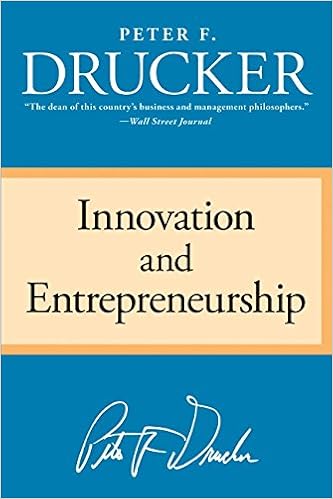
Innovation and Entrepreneurship by Peter F. Drucker

1) The general theme of Innovation and Entrepreneurship is that innovation and entrepreneurship need to become an integral part of organizations, the economy, and society. In the conclusion of his book, Drucker talks about innovation and entrepreneurship being the preferred change-agents in society because they are pragmatic (based on opportunity) rather than dogmatic (based on ideology). When we have a society that is based on opportunity, we have a society that rewards those who take advantage of those opportunities. By creating an entrepreneurial economy, we will have a better equipped (more knowledgable) work force and more fair society, because you need to have the right tools in order to take advantage of these opportunities.

2) Innovation and Entrepreneurship relates to what we're learning in class because Drucker writes about how innovation and entrepreneurship help society as a whole. In his book, Drucker claims that a society filled with entrepreneurs will take advantage of all opportunities that are out there. All entrepreneurs might not be successful, but those who do succeed will create a better society for everyone who lives in it.  This is really what our class is about. Dr. Pryor taught us that the definition of entrepreneurship was "the process of creating value (make life better) by bringing together a unique combination of resources to exploit an opportunity". Dr.Pryor is teaching us how to take advantage of these opportunities, "creating value" for us and those around us. In class we are learning how to create value and the book is telling us how this will help society. Innovation and Entrepreneurship is an extension of what we are learning in class, and this is where the book and our class connect to one another.

3) If I were to design an exercise for this class based on the book, I think I would want everyone to think about the greater effect their idea will have on society. First I would have people think about who they are going to be helping. Then I would have everyone think about what the people they are going to help are dealing with now. Finally, I would have everyone think about what their target market's life is like after their idea is implemented. For instance, the idea I am working on is creating online presences for small businesses. Many small businesses are having to close down because of tough government restrictions on people shopping in-person. If every small business had an online presence, the amount of businesses closing right now would be "slim to none". People who work in retail stores wouldn't be losing their jobs because they can now sell to customers over the internet. By identifying the greater effect your idea will have on society, you can affirm that your opportunity exists and that you will be "creating value" for yourself and the people in your community.

4) The biggest "aha" moment I could identify in the book came when he connected the idea of an entrepreneurial society with something that Thomas Jefferson said. Towards the end of his life, Thomas Jefferson said "Every generation needs a revolution". During Jefferson's time, revolutions were drastic, had a lot of bloodshed, and really didn't solve the problem that they set out to solve. Drucker claims that in an entrepreneurial society, revolutions instituted incremental change, contain no bloodshed and always solve the problem they aim to solve. More specifically, Drucker writes " It is precisely because innovation and entrepreneurship are not 'root and branch' but 'one step at a time'... because they are not planned but focused... because they are tentative and will disappear if they do not produce the expected and needed result" (Drucker, 254). In an entrepreneurial society, we can get the changes that we need, not the changes that others think we need. This was an "aha" moment for me because  I had never thought about revolutions like that. For instance, think about the American Revolution, it last roughly 20 years (from the first protests to the Treaty of Paris). Many were killed, and after it was done, we were left with a divided country (Federalists vs. Anti-Federalists). I'm not saying the American Revolution was bad, but if it was an entrepreneurial society, a lot of this could have been avoided: less bloodshed, quicker, etc. I've said this a million times, but if we lived in an entrepreneurial society, we could get the changes we need not the ones that others think we need.

Amazon.com: Innovation and Entrepreneurship (9780060851132 ...

Monday, July 13, 2020

Growing Your Social Capital

My Three New Contacts

1a) The first person I established contact with was Peyton Marinelli. He is a third year computer science major at the University of Florida. In the past, he has created websites and knows several different computer languages.

1b) Peyton would be a supplier. The current plan for my business is to hire independent contractors to make and manage the online presences for small businesses. I think Peyton would work well in this position because of his knowledge of computer languages and previous experience making websites.

1c) Peyton and I shared a chemistry lecture during our first semester of school. We exchanged phone numbers with the intent of starting a study group but that never "panned" out. I still had his phone number and decided to contact him for this assignment.

1d) I told him that I was contacting him for an assignment I was doing and asked him what he thought of my business idea. He said he didn't realize that this need existed and said "Thanks for the idea" (He was joking about this). He said that if this need does exist, my way of solving it would work. He finished by saying that if I pursue this, he expects a job offer at some point.

1e) Given Peyton's knowledge, I think that he would be a great person to have on my team. He would be a great at creating/managing small businesses' online presences.

2a) The second person I established contact with was Jeff Peterson. Jeff is a software engineer at GoDaddy, a company that is doing something similar to what I want my business to do. The main thing he does is create websites for small businesses.

2b) Jeff falls into the "domain expert in my industry". Jeff specifically creates websites and online presences for small businesses, the exact same thing I hope to do.

2c) I found Jeff Peterson by searching on GoDaddy's LinkedIn for someone who helps create websites. I found Jeff Peterson and then I added him.

2d) When I connected with Jeff, I asked him if I could go over my "business plan" with him. He said that he would happily look over it if I just emailed what I plan on doing to him. He looked it over and gave me back some good feedback. I asked if there was anything I could do to return the favor, and he said that he was happy just to help a future small business owner.

2e) I think the connection I made with Jeff will turn out to be very beneficial. I think that he could end up being a very good mentor, helping me provide small businesses with the best service possible. Additionally, I think he could point me in the direction of other website designers that are looking for work and would want to be a part of my business.

3a) The final person I established contact with was Russel Thomas. He is a fishing boat captain that takes people deep sea fishing. In addition to being a fishing boat captain, he is a contractor.

3b) Russel represents a large piece of my target market, small business owners. As a small business owner, he would definitely benefit from having an online presence. With an online presence, he could have a place where people could book times to go fishing, etc.

3c) Russel was actually the person who took my brother, my dad, and I fishing. My dad found out he took people fishing because Russel overheard my brother and dad talk about going fishing, while he was fixing something at our house. I got Russel's phone number from my dad and I contacted him.

3d) When I contacted Russel, I asked him about whether he would benefit from having an online presence, in order to further confirm what I found out from my market research. He said that he would definitely benefit. He said that with one, he would be much easier to contact and it would probably increase the amount of appointments he gets because he is now more marketed. he said that he relies on word of mouth in order to get new business. He said that in exchange for talking to me he would love a website, sadly, I don't quite know how to make one. However, I assured him that once this business is off of the ground, he would be the first one to get one.

3e) I think having Russel in my network will help me out a lot. You find that a lot of small business owners usually know one another, so being in contact with him could help me get in contact with other small business owners.

Reflection

I think that this experience has further emphasized the importance of having good connections. Connections are what get you "in the door" at some places and can help you make other beneficial  connections. I think that I will definitely participate in some networking events in the future because you can make some really good connections at those events and like I said before, it can "open doors" for you. I think this experience was largely similar except for one person. For Jeff, I used LinkedIn to connect with him. I had never used LinkedIn before to connect with someone I didn't know. The fact that I could connect with him even though I didn't know him shows how powerful a tool LinkedIn is for meeting people. I think there are many tools out there (LinkedIn, class, etc.) to make connections with people who could help you out in the future.

Thursday, July 9, 2020

Elevator Pitch No. 2

My Pitch (Part 2)

Attached is a copy of my second elevator pitch. Any feedback is appreciated.


Reflection of the Feedback I Received 

I think that the feedback I received was great. I think it all was very constructive, and I tried my hardest to incorporate it all into this pitch. The two that stood out the most to me were from Lily and Tracie. Lily said that I should spend more time talking about how I am going to solve the problem instead of talking about the problem. I think this is very helpful because if I were in front of someone, they would know that there is a problem but not really have a good grasp on how I am going to solve the problem. Tracie talked about how I lacked excitement in my presentation. I think this is great advice because no one would want to go into business with someone who isn't excited about their own idea. One piece of feedback that surprised me was actually Lily's. I thought I spent a good amount of time on my solution, but after going back and rewatching my first pitch, I realized that I didn't do it enough. I though everyone's advice was very helpful and it definitely made this version of the pitch better!

How I Incorporated the Feedback

The first couple pieces of advice I received (from Sophia and Ashley) had to do with me talking about my team and using the word "we" instead of "I". I tried to incorporate this feedback into my pitch by adding a section about my team. In this section, I talk about the people who are going to create the online presences for these small businesses. By adding this section, I think I addressed both Sophia and Ashley's advice because it shows that this business is about more than just me but everyone who is a part of our team. I tried to address Tracie's advice by changing the setup of the room I'm taping in. I put my video recorder on a little bit of a higher surface (this didn't really solve the problem because I'm a little bit on the taller side and can't really find a surface tall enough to be chest/eye level). I also tried to talk with more excitement. Finally, when it came to Lily's advice, I divided my pitch into two parts: the problem and the solution. I tried to keep the "problem" section to about 30 seconds which gave me about 60 seconds to talk about the "solution". I think setting a time limit on the "problem" section made it where I had to spend more time talking about how I was going to solve the problem.

Tuesday, July 7, 2020

Idea Napkin No. 2

Idea Napkin

Note: I didn't receive any feedback on my original Idea Napkin post, so I will be revising my napkin to reflect what I have learned about myself and my idea through this class.

1) I think some of my greatest talents have to do with my human skills. Personally, I enjoy talking to people and getting to know them. I consider this a talent because all entrepreneurs should know how to effectively communicate with others. This allows you to receive good feedback about your product/service and form relationships with others who could help you out later on down the road. As far as experiences are concerned, I consider the interviewing part of this class to have been a very formative experience. I think it was formative because it gave me the opportunity to hone my ability to communicate with others and form some budding relationships with local business owners. Also, it gave me insight as to what an entrepreneur with a similar idea to mine has to do in order to be successful. As far as my business concept is concerned, I am aspiring to provide all businesses with an affordable and easy way to achieve and manage their online presence. Based on all of the interviews I have done, I understand that not every business has this need. However, there is still a great number of them that still do. Some of the information I have found showed that approximately 46% of all small businesses don't have an online presence. Even if I'm not able to provide an online presence for all businesses, if I can provide one for the 46% of businesses that don't have one, I'll consider my business a success. Personally, I think that this will satisfy a huge need that all businesses have and will have in the near future. For that reason, I would want this business to play a large role in my life because I know that I would be doing some good by providing this service. However, I think I want to gain some work experience that I could apply to the business before I start it. For instance, I am a finance major, and if I knew how to do more of the technical skills associated with finance, I think my business would be much more successful.

2) Many small businesses don't have an online presence, approximately 46% of them. The service I'm planning on providing is going to provide small business owners with an easy and affordable way to obtain and manage an online presence. By providing them with an online presence, these small businesses will be able to expand their reach and sell to customers who don't physically enter the store.

3) The people I will primarily be targeting are those who own small retail stores and those who own small gift/"knick-knack" shops. By doing more interviews, I was able to narrow my list down more. Previously, I had said that maybe private practice physicians or small marketing firms could use it but the more people I talked to, the less it seemed like those were going to be a good group to target. I think I could still provide my service to them, but I will be primarily providing my service to small retail and gift shops. The shops that I would be targeting would preferably not have an online presence because they couldn't afford one or they couldn't figure out how to manage it, or a store that is looking to improve their existing online presence. I think the thing that all of my potential customers have in common are that they are looking to reach their customers. When you don't have an online presence, you can reach your customers unless they walk into your store. If you are looking to improve your online presence, it means that you are not effectively reaching your customers over the internet.

4) I think the reason these small businesses care is because many of them are at risk of closing because of the coronavirus. Government restrictions because of the coronavirus are hindering small businesses' ability to sell to customers. So, businesses that once sold all of their products in-person are now no longer able to that. One way to get around this would be to sell to customers over the internet. By using my service, these small business owners will now be able to sell to customers during the pandemic. Even once this ends, I think they would be happy to continue using the service because they will see that they now have a much larger reach than before.

5) I think the thing that'll set my business a part from others that do similar things is that I will take a cost-leadership approach. My idea is that if I can provide this service for less money than other businesses, then I can reach the 46% of small businesses that were not able to afford an online presence. In a different post, someone asked how I would go about doing this. I think that I would do it similar to how Uber does it. I think I would pay independent contractors to make the websites. I think this would help lower the costs associated with making the website and would allow me to charge customers a lower price. I think some of the competencies I possess that would help me be successful are my human skills and my hard working attitude. I think I addressed this in the other "Idea Napkin" assignment, but they still hold true. I think my ability to communicate will help me a lot because it will allow me to form relationships with potential customers, employees, suppliers, etc. Having these types of relationships will make running a business much easier. Also, I think that I am very hard working. I think this will take me very hard when it comes to running a business. Many entrepreneurs work more than 40 hours a week, and I think this trait will give me the ability to do that and make the best of my time.

Evaluation

I think that the elements of my business concept fit together for the most part. I think the skills I have and the nature of the business I plan on running fit very well. For instance, my business hinges on making relationships with small business owners and trying to satisfy their online presence needs. I think that my human skills will allow me to create and maintain those relationships with business owners. In my opinion, this business I am coming up with is just as much about customer service as it is about creating websites, so human skills are especially important. I also think narrowing down my target customer to just small retail/gift shops has created even more fit. Now that I know these customers most need my service, I can focus all of my efforts trying to market my service to this particular group of customers. The one place where there really isn't much fit is in the technical part of my business. I don't know how to make a website. As previously said, I plan on outsourcing most of the programming, but it would still be good to know how to program and make a website.

Feedback Memo

Like I said at the beginning of the assignment, I didn't receive any feedback on my original assignment, so I'll be talking about how my research and lectures have affected my Idea Napkin.

One main point that I've taken away from lectures is the importance of narrowing down the list of who you are selling to. It is important to figure out who needs your service the most because they contribute to your revenue the most. In class we learned that this was called the Pareto Principle. By identifying the group that needs my service the most, I figured out who I need to market my service to the most because they will contribute the most to my business' revenue. I incorporated this point into my idea napkin by adjusting what I had written in part 2. Originally, I had included businesses like private practicing physicians and small marketing firms. After conducting interviews, I realized that the customers who truly needed this service are those who own small retail/gift shops. The other point that I've taken away from class and my research is that human skills are extremely important when it comes to running and starting a business. I think I've kind of always known this on a subconscious level, but never to the extent that it actually is. If I'm remembering correctly, Dr. Pryor said something to the effect of "relationships are what keep customers" when he was talking about patents. I think this is definitely true. Relationships are what allow you to get customers to be loyal to your business. Ever since then, I have tried to emphasize that idea in my assignments. In this idea napkin assignment, I talked about how my business was more about customer relationships than it is about making websites. Even though my business is about creating an online presence for small businesses, I can't create it for anyone if I don't have any customers.

Create a Customer Avatar

Customer Segment

My avatar is going to be the owner of a small retail business.

My Avatar

I think the prototypical customer for my business would be someone in their 50's or 60's, who is trying to realize their dream of opening a small business. All of their kids are out of college and they now have more money to spend on their dreams. Even though they are in the "back nine" of their lives, they view their small business as a new beginning and an opportunity for adventure. They are so "all in" on this idea of starting a small business, that they are changing how they live their lives. I envision that they traded in their Mercedes for a Ford, and they even moved into a smaller house, so they could put as much money in their business as possible. This prototypical customer doesn't have much experience with technology, so I assume they are pretty "outdoorsy". Also, I assume that since they are successful small business owners they have great people skills and being around people. For instance, I'd assume that they would love to sit down with whomever walked into their business and "talk their ear off" for a couple of hours. To demonstrate how "outdoorsy" and people oriented they are, they would probably love reading books like The Old Man and the Sea by Ernest Hemingway or The Adventures of Huckleberry Finn by Mark Twain, and watching tv shows like Shark Tank or Breaking Bad. Although these books and tv shows are about different topics, they share one common theme that my prototypical customer probably likes the most: adventure. I think the most important quality my prototypical customer has the desire to be adventurous. Opening a small business is an adventure. There are going to be ups and downs, and my prototypical customer is going to face these challenges as they come to them.   


Group of Elderly People Hiking by Pressmaster on Envato Elements

                                                               Successful Aging: What you say matters when talking about older ...

What We Have in Common

I am not in my 50's or 60's but other than that, I think I am pretty much the same as them. I love being outdoors, talking to people and being adventurous. Even though I don't see myself going out and starting a business now, I can totally see myself starting one later in life once I have more disposable income. I honestly don't think this is much of a coincidence. I think most people who start small businesses have to have these qualities in order to be successful and as someone who would like to start a small business one day, I would also have to have these qualities and attitudes to be successful. I think the main reason we have so much in common is because we are/will be successful small business owners.

Thursday, June 18, 2020

What's Your Secret Sauce?

My Secret Sauce

1a) I think that one of my best traits is my ability to empathize with people. When it comes to working, I have worked with in many types of industries, and have had the opportunity to meet many different and have different experiences. I think this as helped me improve my human capital, because it will allow me to relate to the people with whom I work.

1b) I'd like to think that I am a really nice person. My parents instilled this quality in me when I was young, and I think it is probably the quality that will take me the furthest in life. Being nice will allow me to form great relationships with people and will open up a lot of opportunities.

1c) Another quality that I think I have is my hard working attitude. This is another quality that was instilled in me by my parents. I attribute all of my accomplishments to hard work and I think that all of my future accomplishments will be because of my hard working attitude.

1d) I'd also like to think that I am a very generous person. Like the rest of the qualities I listed, I learned this from my parents. And also like the rest of my qualities, I think this will help me form strong relationships with people.

1e) The final quality that I think will help me out is my "go with the flow" attitude. I think this quality will help me out in my life and career because it will create a positive environment for myself and those around me.

2a) The first person I interviewed was my mom, Dale Templin. She talked about how I am a compassionate person. She continued by saying that this trait will take me far as an entrepreneur because it will allow me to better deal with customers and employees.

https://soundcloud.com/user-714281871-744356818/dale-templin

2b) The next person I interviewed was my dad, Robert Templin. His interview was pretty long, but the thing that I took from it was that I am a hard worker and I am a very determined person. He said that this would help me be an entrepreneur because it'll allow me to get things done. Whatever I set my mind to, I will get done.

https://soundcloud.com/user-714281871-744356818/robert-templin

2c) The next person I interviewed was my aunt, Ann Bradford. The quality that she liked the most about me was my sense of humor. She believes that my sense of humor will help me be an entrepreneur because it will allow me to form great relationships with those I interact with: customers, employees, employers, etc.

https://soundcloud.com/user-714281871-744356818/ann-bradford

2d) The next person I interviewed was my brother, Robert Templin. In the interview, my brother addressed how hard of a worker I am and how that will help me in both life and as an entrepreneur. He said that being an entrepreneur takes courage, hard work and self-sacrifice and these qualities will help me become a great entrepreneur.

https://soundcloud.com/user-714281871-744356818/robert-templin-iii

2e) The final person I interviewed was my grandmother, Barbara Webb. The big takeaway from the interview I did with my grandmother was that I am willing to take on new projects and risks. She believes that this will help me be an entrepreneur because taking on a new project/risks is the first step in becoming an entrepreneur.

https://soundcloud.com/user-714281871-744356818/barbara-webb

3) I think that the way I see myself and the way others do is for the most part the same. However, there are some differences. For instance, my grandmother sees me as being a risk-taker. I never saw myself as a risk-taker, but I must have done something that gave her that impression of me. Either way, I consider that to be a compliment. In most cases, being a risk-taker is a good thing, especially when you are trying to become an entrepreneur. I think the cause of these differences is purely contextual. By that, I mean that it depends on the occasion that I was spending with that person. For instance, my aunt thinks that I am funny. She might think that because I made one or two good jokes while I was around her, when in reality, I might not be that funny. I'd like to think that the people I interviewed are correct about me because they said some really nice things about me and thats is one of my main goals in life: to be the best version of myself that I can be. If I were to go back to question one and change something, I don't think I would change anything. I wouldn't change anything because all of the people I interviewed brushed over the qualities that I wrote about in part one. For instance, my mom talked about 1a and 1b, and my dad talked about 1c, 1d, and 1e.

Monday, June 15, 2020

Figuring Out Buyer Behavior No. 2

The Segment

Like last assignment, the segment I will be investigating is small retail stores.

The Interviews

1a) Dee, owner of Ellie Bing

3a) I began the interview by asking Dee what her alternatives were for creating a website and social media. She said that she had to decide whether to create a website/social media herself or pay someone to do it. She thought that she had the "know how" to create one herself, so there was no need to pay someone to do it for her. However, she said that it did not turn out that well, so she is considering redoing it. She said price and quality were the most important factors to her. She said that she was saving money by creating/managing the website herself, but the quality suffered by doing it herself. She said that because quality was suffering she is having to reconsider whether she wants to redo it herself or pay someone to do it. In all, her decision came down to finding a balance between quality and price.

4a) Dee said that if she were going to pay someone to do it, she would try to find someone who is a freelance website creator on Craigslist. She says that if she were to pay someone, she would probably pay them cash to do it.

5a) Dee believes that a successful website is one that generates a lot of traffic. Dee believes that the most important thing about an online presence is the quality of it, because she believes that it is what brings traffic to the website. She says that she will know the purchase was a bad one if the quality isn't good or the website doesn't generate any traffic.

1b) Gloria, manager of Builders Discount

3b) I asked Gloria what her alternatives were when Builders Discount created their website, and she said that there really weren't any because they lacked the "know how" to make one themselves, and they got a really good deal on a vendor making them one. She said that Builders Discount entered into an agreement with a vendor, and the vendor created a website for them. Gloria said that the thing that matters most when. it comes to a website is whether it has the appropriate information on it. Since, she had a vendor create the website for her, she said that she worries about it not having the correct information on it. So, the most important factor when it comes to the website is that it is done correctly and up to date.

4b) She said that it was a B2B transaction when their website was created. She said that the only people involved in the transaction were the managers of Builders Discount and the vendor from which they bought the website. Gloria said that Builders Discount paid for their website with cash and pays them a yearly fee in order to have the website maintained.

5b) Gloria believes the most important thing when it comes to their website is that the information is correct and that there is a lot of traffic. If the website does not generate traffic, then there is really no point in having a website. Also, if the website doesn't have the correct information (inventory, etc.), then customers are going to be disappointed with you when they find out that you don't have what they're looking for. Gloria believes that it was a good purchase if they end up getting a lot of traffic on their website and bad if they don't. Gloria is under the impression that traffic is the #1 determiner of what makes a website good. To Gloria, a bad website is one that tells consumers the incorrect information or is poorly made.

1c) Janette, long-time volunteer at Beam Thrift

3c) As a non-profit, Janette explained to me that they get volunteers with the "know how" who create websites and manage them for free. Janette told me that Beam Thrift probably didn't have to make a choice because they probably took the first person up on their offer to make them a website. Being a non-profit and receiving the offers that they did, they do not need to worry about the price. Janette explained that the only thing Beam Thrift needs to worry about when it comes to the website is the quality.

4c) Janette explained that when they were approached to have a website made, the person was a volunteer of the store and said that he noticed they didn't have a website. He said that he was willing to make a website for them free of charge. In this case, there wasn't really a transaction involved. Janette explained that this is partially due to the nature of running a non-profit. Janette acknowledged that this only happens for non-profits and says that if Beam Thrift were a for-profit store, they would probably have to pay a freelance website creator to do this for them.

5c) She says that the website's and social media pages' main  purpose is to tell customers where the stores are located, and tell them their mission, so she says the most important thing for their website/social media to do is bring people into the store. Janette says that more people have come into the store ever since they got a website, so she believes that the website and social media pages are doing what they were designed to do. As far as what makes a website/social media page bad, Janette believes that anything other than making people aware of the stores existence would mean making the website was a bad idea.

6) All fo the businesses that I interviewed were small retail stores. All of them agreed that they saw a benefit in having an online presence. However, the things they needed their online presence to do and how they obtained their online presence were different. Some needed it to attract customers, provide customers with information about the store, or look nice for customers. The amount of traffic that the website generated or the amount of people that came in because of the website determined whether they thought their purchase was good. Finally, some decided to create/manage the website themselves, pay a vendor to create it for them, or have a volunteer make it for them.

7) Based on my interviews, I think that there are three main alternatives for creating/maintaining a website and social media: in-house creation,  pay a vendor, or pay a freelance website creator. The main determiners of what option they chose depends on whether they have the "know how", the cost, and the quality of the website. Finally, their happiness after the purchase depended on whether their online presence met their need and all of them had different reasons for wanting an online presence. For instance, one business wanted their website to attract customers to the store, while the other wanted their website to give customers the correct information in terms of inventory. All of these businesses have different wants and needs from their online presence and different ways of obtaining one. However, by obtaining an online presence, they have improved their business.